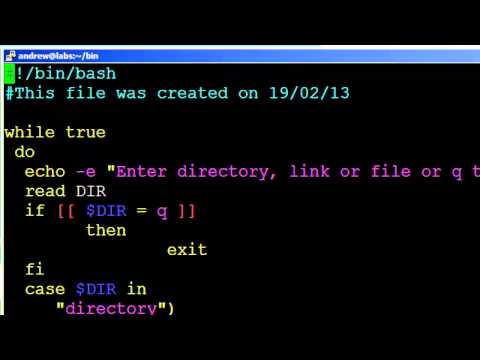
Create a bash file named 'for_list3.sh' and add the following script. An array of string values is declared with type in this script. Two values in the array which contain space are "Linux Mint" and "Red Hat Linux". This script will generate the output by splitting these values into multiple words and printing as separate value. The solution of this type of problem is shown in the next example.

A list of strings or array or sequence of elements can be iterated by using for loop in bash. How you can iterate the list of strings in Bash by for loop is shown in this tutorial by using various bash script examples. If you are novice is bash programming then you can read the tutorial on BASH For Loop Examples before starting this tutorial.

First, importing the os module that is necessary to work in a directory. Creating for loop to iterate every time to get the list of files in a specified path. The statement if is useful to check whether the directory is available in a specified path. If the file is there, it will display the list of files.

Next using os.scandir() to get the iterator of the DirEntry of the specified path. Creating for loop to iterate every time to get an iterator in a specified path. If the file is there, it will display the list of files; otherwise, it shows a filenotfound error. Create a bash file named 'for_list4.sh' and add the following script.

In this example, every element of the array variable, StringArray contains values of two words. To print each value without splitting and solve the problem of previous example, you just need to enclose the array variable with double quotation within for loop. The osis a module that is already available in python. This module is useful for working withdirectories. The module is useful to change the current working directory, iterate over files, get the working directories, etc.

It has a function to interact with an operating system. Python provides five different methods to iterate over files in a directory. Os.listdir(), os.scandir(), pathlib module, os.walk(), and glob moduleare the methods available toiterate over files.A directory is also known as a folder. The module os is useful to work with directories.

Sometimes we need to iterate over all files of a specific file extension using a bash script. This can be used to convert one type of file to another or any other use case. Here are some approaches for iterating over .txt files in a directory tmp. Create a bash file named 'for_list1.sh' and add the following script. A string value with spaces is used within for loop.

For loop will split the string into words and print each word by adding a newline. This is what is called a Bash script which is a plain text file that contains a series of commands like the loop you created above. The second line demonstrates how comments are made in scripts.

This provides you with more information about what the script does. The remaining lines contain the loop you created above. When you've done this, you can run the Bash script by typing the command bash and the file name via the command line (e.g. bash my_first_bash_script.sh). In a programming or scripting language, Bash offers several ways to repeat code—a process called looping—where a for loop repeats a certain section of the code. This allows a series of commands to run until a particular condition is met.

In this guide, we show you how to write a Bash for Loop. We already know that if the path is not specified, it will display the list of files in a current working directory. We don't specify the path—next printing the list of files in a current working directory. The find command is used to search and locate the list of files and directories based on conditions you specify for files that match the arguments.
Find command can be used in a variety of conditions like you can find files by permissions, users, groups, file types, date, size, and other possible criteria. Create a bash file named 'for_list2.sh' and add the following script. Assign a text into the variable, StringVal and read the value of this variable using for loop. This example will also work like the previous example and divide the value of the variable into words based on the space. Here we are going to get the files with certain extensions.

Suppose the statement is used to check the extensions. The files with a given extension are displayed; others are ignored. The break statement is used within the 'for loop' to end the loop. For instance, we will use for loop to read the list of names, and we will test two conditions. The first is if the person's name is 'Jordan' and the shape 'Triangle,' so in this case, the loop will terminate after it prints the Jordan and Triangle. The for loop for the shape will run until the shape is matched.

Aforementioned, Loops are set of commands that a computer executes over and over again until a predefined condition is met. Programmers also have the liberty to break the loop even before the condition is met. Commonly, the Bash For Loop is leveraged for various tasks such as to count files or also look for information. For instance, if you want to execute an instruction five times, it is best to run the for loop syntax rather than typing the same code five times. The for loop is an essential programming functionality that goes through a list of elements. For each of those elements, the for loop performs a set of commands.

The command helps repeat processes until a terminating condition. Create a bash file named 'for_list7.sh' and add the following script. In this example, two string arrays are defined and combined into another array. The outer for loop is used to read the combined array and the inner for loop is used to read each inner array. Looping allows you to iterate over a list or a group of values until a specific condition is met.

Note that the variables in our if statement are written with quotation marks because the file or folder names may contain spaces. If we had omitted this step, we might not have been able to list all files and directories. Os.listdir(), os.scandir(), pathlib module, os.walk(), and glob module are the methods available to iterate over files.

A for loop is one of the most common programming constructs and it's used to execute a given block of code given a set of items in a list. For instance, let's say you want to write a program that prints the number of people who live in the 10 biggest european cities. The program can use a for loop to go through each city in the list and print the number of people for that city. A common reason people want to learn the Unix shell is to unlock the power of batch processing. If you want to perform some set of actions on many files, one of the ways to do that is by constructing a command that iterates over those files. In programming terminology, this is called execution control, and one of the most common examples of it is the for loop.
Create a new bash file named 'for_list6.sh' with the following code. To end our lesson on scripts, we are going to learn how to write a for-loop to execute a lot of commands at once. This will let us do the same string of commands on every file in a directory .

Because real-world filenames often contain white-spaces, we wrap $filename in double quotes ("). If we didn't, the shell would treat the white-space within a filename as a separator between two different filenames, which usually results in errors. Therefore, it's best and generally safer to use "$..." unless you are absolutely sure that no elements with white-space can ever enter your loop variable . Loops are key to productivity improvements through automation as they allow us to execute commands repetitively. Similar to wildcards and tab completion, using loops also reduces the amount of typing .
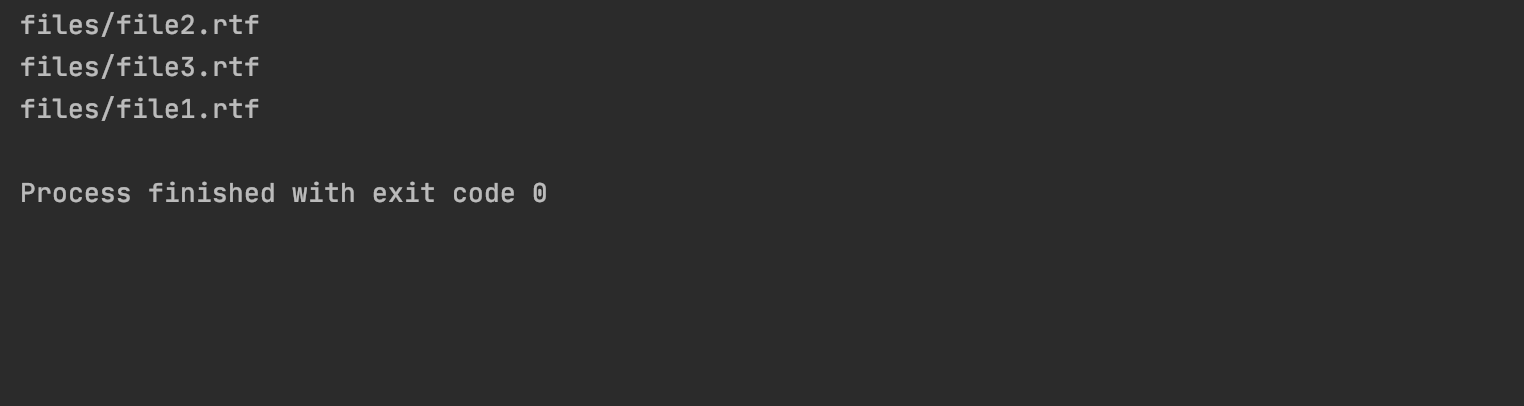
Suppose we have several hundred document files named project_1825.txt, project_1863.txt, XML_project.txt and so on. We would like to change these files, but also save a version of the original files, naming the copiesbackup_project_1825.txt and so on. Line 11 - echo another command to show that the bash script continued execution as normal after all the items in the list were processed. Printing the files and directory of a specified path.

Here we are going to see how to iterate over files in a directory. Five different methods are there to loop through files in the directory. The for loop is one of the most comfortable loops to iterate.
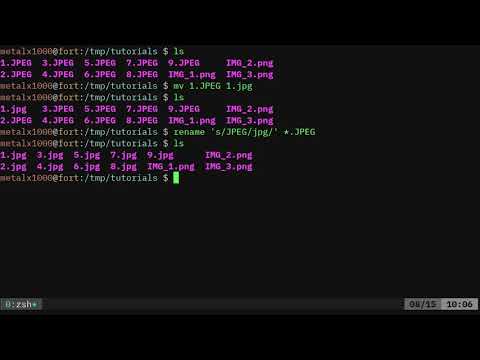
Let us see now how to iterate over files in a directory using python. Unfortunately, as Daniel said, the code in this answer will break if any of the files or folders contains a space or newline in their name. It shows a very common misuse of for loops, and a typical pitfall of trying to parse the output of ls. @DanielA.White, you might consider unaccepting this answer if it wasn't helpful , since like you said, you're acting on directories. Shawn J. Goff's answer should provide a more robust and working solution to your issue.

The given set of items can be a literal set of objects or anything that Bash can extrapolate to a list. For example, text pulled from a file, the output of another Bash command, or parameters passed via the command line. Converting this loop structure into a Bash script is also trivial.

So you have to perform some functions on files and directories. You can execute the below explained commands on any directory of your choice. But to be precise, it is preferable to create a new directory so that all the belongings of this directly are easily accessible when you open it. Now that you've been exposed to some common Bash commands, it's time to understand how to use arrays and loops. And finally we'll show some real-world examples of how you can loop over arrays in Bash scripts. In this example, we loop through every account in /home– assuming, as we should expect, that there are no other files or directories in /home.

Write a Bash script which will take a single command line argument and will print each entry in that directory. If the entry is a directory it will print how many items are in that directory. Creating for loop to iterate and giving the path of the directory. Glob() yields all the files of the specified directory.

Next printing the files in the specified directory. Bash For loop is a statement that lets you iterate specific set of statements over series of words in a string, elements in a sequence, or elements in an array. The for loop is often considered as an iteration statement whereby it is a way to repeat a process within a bash script.
One can use the for loop statement even within a shell script. While the For Loop is a prime statement in many programming languages, we will focus on how to use it for the bash language. Loops are one of the most powerful and fundamental programming concepts that allow users to execute a command or set of commands repeatedly. The Loops come in very handy for all programmers where they have to run a series of commands repeatedly until it accomplishes certain conditions. Searching for specific files or directories can be time-consuming. You can use a bash command or script to streamline the process.

The Bash comment offers an alternative syntax for command substitution. The code reads the contents of the list.txt file using the cat command and saves the information to a variable list. Whether you're going through an array of numbers or renaming files, for loops in Bash scripts provide a convenient way to list items automatically. When you write "p" on the command line, it will change the directory. If you run a bash script then it will operates on its current environment or on those of its children, never on the parent. Dirname is a built-in command on Linux and Unix-like OSes; it is used to identify paths in shell scripts.

To see a list of all subdirectories and files within your current working directory, use the command ls . In the example above, ls printed the contents of the home directory which contains the subdirectories called documents and downloads and the files called addresses. Select all the files, press and hold the shift key, then right-click and select Copy as path.

This copies the list of file names to the clipboard. Paste the results into any document such as a txt or doc file & print that. Then open notepad, open tempfilename, and print it from there. In each file, we'll use the for loop to iterate over files and the -e flag in echo to preserve newlines. After verifying the files created by displaying the names of files, now it's time to enter the value in the files because the files created are empty.
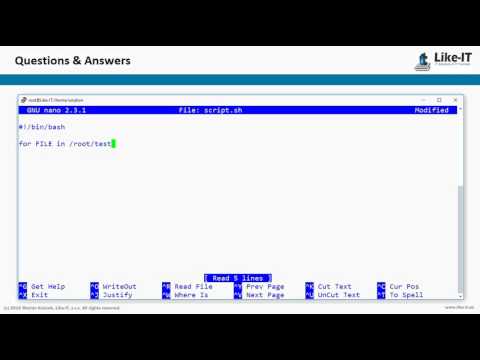
This can be done manually by opening each file in the text editor and then writing the data. The second option is to enter data in each file through the command in the terminal. But it requires time to enter the data in each file through single command for each file.